Composite profile
Overall score
80/100
Rome is most useful for users weighing cultural depth and walkability against heat, mobility, and infrastructure-renewal needs.
Overall80/100
Affordability70/100
Air quality74/100
Energy76/100
Italy / Southern Europe
Rome is a historic Mediterranean capital where deep cultural heritage meets a working modern metro and active climate-adaptation work. Rome is a southern europe city of about 4.3M metro in Italy. On the composite city-intelligence score, Rome sits comfortably above the indexed median (80/100).
8 of 8 published intelligence dimensions. Positions compare Rome with other indexed cities in Italy.
Strongest in Italy
Where a position is shown, it compares Rome with the other indexed cities in Italy — using the data currently published on this site, not any external benchmark. Cities whose indicators are still pending integration are excluded from those comparisons entirely, and no position is shown for a country with fewer than 10 comparable cities. Where too many cities share the same published value to separate them honestly, the card says “Typical for this country” instead of a stronger claim, and positions describe rank order rather than a fixed percentage.
Cities with comparable characteristics based on the indicators currently published by Global City Intelligence.
Cities that stay broadly comparable to Rome while improving one named indicator. Each result states what it gains and what it gives up.
Choose an indicator to see alternatives.
Recommendations use the indicators currently published on this site — they are not external rankings. Each indicator is scaled to a common range before cities are compared, so no single measure dominates because of its units, and only cities with a complete set of published indicators take part. Cities whose data is still pending integration are excluded entirely. An alternative must stay broadly comparable to Rome and improve the indicator you chose by a margin large enough to be meaningful rather than rounding noise; where it gives something up in exchange, that is stated on the card.

Image credit: Image: Bert Kaufmann from Roermond, Netherlands / Wikimedia Commons, CC BY-SA 2.0
Additional verified imagery for Rome, Italy. Each photo is sourced from Wikimedia Commons with full attribution and a permissive license.
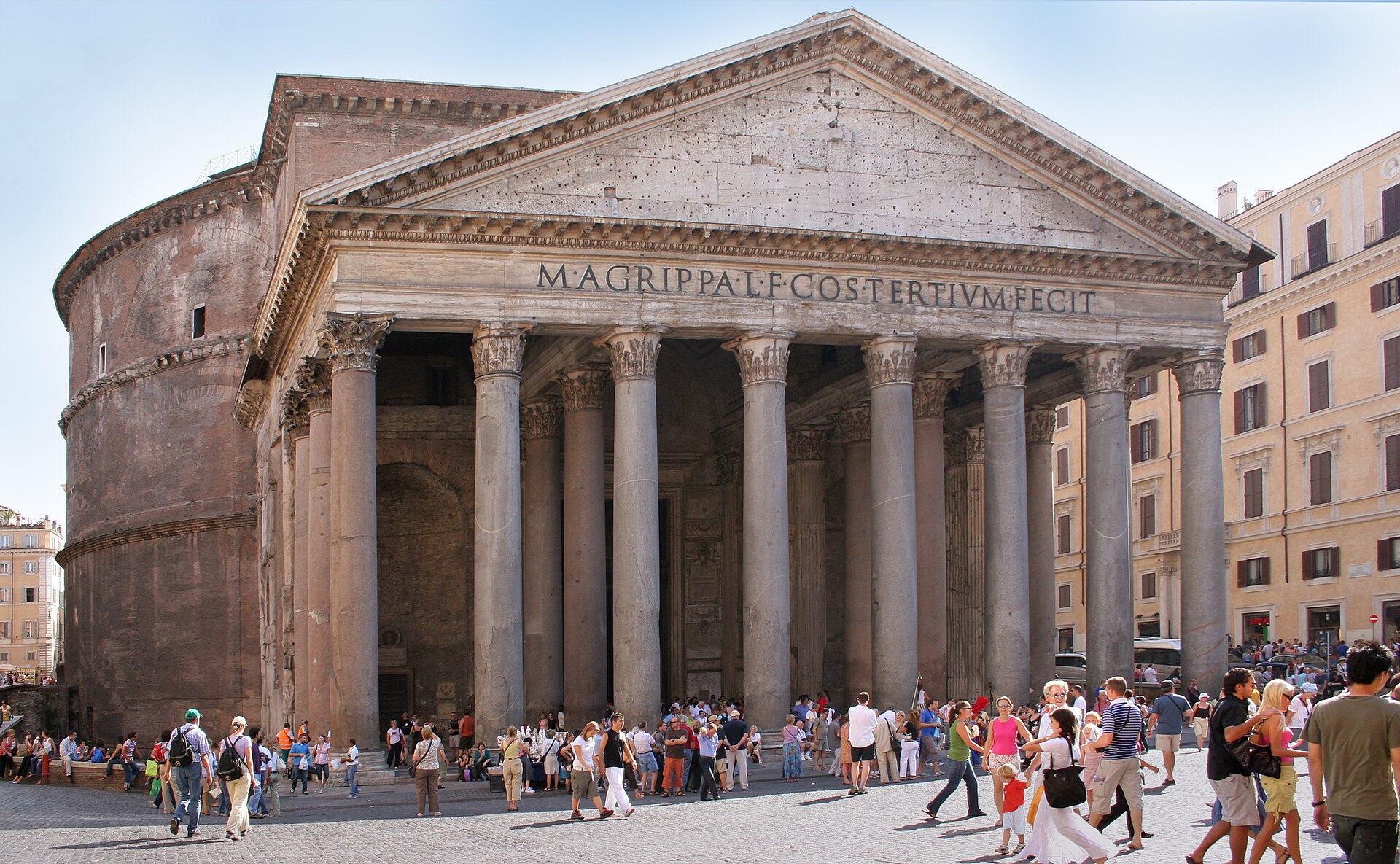
Pantheon, Rome
Image credit: Image: Roberta Dragan / Wikimedia Commons, CC BY-SA 2.5
Composite profile
80/100
Rome is most useful for users weighing cultural depth and walkability against heat, mobility, and infrastructure-renewal needs.
80/100
Strong cultural and walkability profile balanced against mobility and heat pressure.
Exceptional
Heritage sites and creative life shape daily experience.
Very high
Compact historic core supports car-light daily life.
The table is part of the initial server-rendered HTML and mirrors the key city score cards.
| Metric | Value | Context |
|---|---|---|
| Overall score | 80/100 | Composite score across major city intelligence modules. |
| Cost of Living | 70/100 | Rome offers moderate affordability for a major European capital, with central rents and tourism shaping price levels in popular districts. |
| Air Quality | 74/100 | Rome's air quality is moderate-to-good with traffic-related pollutants the main focus and EU monitoring providing strong trend visibility. |
| Energy | 76/100 | Rome's energy profile reflects solid Mediterranean solar resource and ongoing national renewable build-out, with building retrofits a focus. |
| Safety | 80/100 | Rome is broadly safe with low violent-crime context and tourist-area pickpocketing the most visible practical concern. |
| Internet Speed | 80/100 | Rome delivers solid fiber broadband and reliable mobile coverage, with national fiber rollout still expanding district by district. |
| Climate Risk | 72/100 | Rome carries moderate climate exposure centered on heat and dry-summer water stress, balanced by EU adaptation framing and city programs. |
| Resilience | 74/100 | Climate adaptation and infrastructure continuity context. |
Deterministic safety estimates from our index — planning signals derived from country priors and city data, not official crime statistics.
Rome is estimated to be a generally safe city (77/100 in our safety index), with solid personal-safety indicators.
A composite quality-of-life estimate and its component indicators.
Rome has a very high quality-of-life estimate (83/100), with notable strengths in healthcare, public transport, cleanliness and infrastructure.
How the city scores for raising a family, with the indicators that drive it.
Rome scores high for family living (79/100), helped by education access, safety and healthcare.
Suitability for remote workers, based on connectivity, mobility, and livability.
Rome is very high for remote workers (81/100), based on connectivity, affordability, walkability, safety and overall livability and day-to-day amenities.
Suitability for retirement, weighing healthcare, affordability, climate, and environment.
Rome is very high for retirement (80/100), appealing for healthcare access, affordability, a comfortable climate and a clean environment.
Local public safety guidance for Rome, with the country-level emergency contacts that apply when calling for police, fire, or ambulance.
| Service | Number | Notes |
|---|---|---|
| European emergency | 11224/7 | Italy operates 112 as a single emergency number (Numero Unico di Emergenza) across the country. |
For the universal emergency contacts that apply in Rome, including police, fire, and ambulance, see the Italy emergency profile.
Each emergency contact above is attributed to an official emergency service or government publisher. Confirm current numbers directly with these sources.
Used as the primary attribution for the EU-wide 112 universal emergency number on European country profiles.
Last verified: 2026-05-16
Methodology and the wider source registry are documented on the scoring methodology and data sources pages.
Healthcare context for Rome, with national-level information from Italy where city-specific data is not yet verified. This is informational only and does not provide medical advice.
For the national healthcare and public-health context that applies in Rome, see the Italy healthcare profile, which currently lists no verified national healthcare information.
Related sections: emergency and public safety, scoring methodology, and data sources.
Local mobility context for Rome, with national-level context from Italy where city-specific data is not yet verified. This is informational only.
For national transport authorities and operators that apply in Rome, see the Italy transport profile, which currently lists no verified national transport information.
Related sections: emergency and public safety, healthcare and hospitals, cities directory, countries directory, scoring methodology, data sources.
Source-attributed air-quality dataset for Rome. Verified measurements are surfaced when published from accepted official datasets; transparent fallback is shown otherwise.
Source-attributed values for Rome will appear here after the platform integrates verified measurements from accepted official publishers. Until then, structured air-quality module context remains available on the dedicated module page.
| Metric | Value | Data year | Status |
|---|---|---|---|
| Air quality | Verified air-quality measurements are not yet published for this location. | ||
Global City Intelligence — air-quality dataset
Verified data unavailableThe air-quality dataset begins empty by design. Verified city-level measurements appear here only after they are sourced from accepted publishers (WHO, EEA, US EPA, OpenAQ, OECD, or official national/city environmental agencies).
Numeric measurements appear in this section only after they are sourced from accepted official publishers. The dataset is independently validated at build time; malformed records cannot ship to production.
Quick, evidence-based answers about Rome drawn from this profile's indexed cost, climate, safety, economy, education, healthcare and nearby-nature data. Figures are deterministic estimates for orientation — verify specifics with official sources.
Yes — excellent quality of life (83/100), with nearby nature such as Tivoli (Villa d'Este and Villa Adriana), Circeo National Park.
Strong (79/100) on safety, schools and green space.
More affordable than average; about €1,500/month for one person (estimate).
Late spring to early autumn; warmest in Jul, coldest in Jan.
Mainly tourism, hospitality, government.
A mediterranean climate, averaging about 15.7°C.
Higher education is excellent (82/100).
Healthcare access is strong (79/100).
Retirement suitability is strong (77/100).
Within ~170 km: Tivoli (Villa d'Este and Villa Adriana), Circeo National Park.
Pairs that share a city, comparison intent, or region — useful for users planning a wider relocation, remote-work, or business decision.
Europe · Regional alternative
Rome vs Milan: Cost, Safety, Healthcare & Transport
Compare Rome and Milan across cost of living, air quality, safety, healthcare, transport, and country context for users weighing Italy's principal economic and political centers.
Europe · Regional alternative
Athens vs Rome: Cost, Safety, Healthcare & Transport
Review Athens and Rome side by side through cost framing, transport access, healthcare and emergency context, and Mediterranean climate-adaptation priorities.
City pages link to module and ranking pages so crawlers can move through the topic cluster naturally.
Rome offers moderate affordability for a major European capital, with central rents and tourism shaping price levels in popular districts.
Rome's air quality is moderate-to-good with traffic-related pollutants the main focus and EU monitoring providing strong trend visibility.
Rome's energy profile reflects solid Mediterranean solar resource and ongoing national renewable build-out, with building retrofits a focus.
Rome is broadly safe with low violent-crime context and tourist-area pickpocketing the most visible practical concern.
Rome delivers solid fiber broadband and reliable mobile coverage, with national fiber rollout still expanding district by district.
Rome carries moderate climate exposure centered on heat and dry-summer water stress, balanced by EU adaptation framing and city programs.
Compare this city against other indexed cities in crawlable ranking tables.
Cost of living estimates for Rome — monthly budgets, rent, food, and transport in the local currency, plus an affordability score for comparison. Planning estimates derived from country baselines, not live prices.
Climate profile for Rome — Mediterranean climate, annual average 15.7°C, comfort score 87/100. Month-by-month temperatures, rainfall, sunshine, and the best months to visit. Deterministic planning estimates, not a forecast.
Economy and jobs profile for Rome — government center, economy score 73/100, key industries including tourism, hospitality, government. Employment, salary, startup, remote-work, and career indicators. Deterministic planning estimates.
Education profile for Rome — student city, education score 78/100, 7 representative universities, plus research, student life, and international-student indicators. Deterministic dataset, not institutional rankings.
Healthcare and retirement profile for Rome — major healthcare center, healthcare score 79/100, retirement score 77/100. Medical access, specialist and emergency care, affordability, and retirement suitability. Deterministic planning estimates.
Practical arrival planning context for Rome — links into transport, public-safety, healthcare, budgeting tools, and methodology. Not an official airport or travel instruction service.
Structured neighborhood research checklist for Rome — links into transport, public-safety, healthcare, arrival planning, and budgeting tools. Not a real-estate, rental, or safety-ranking service.
Structured relocation research checklist for Rome — links into country context, arrival planning, neighborhood research, cost tools, healthcare, public safety, and transport. Not immigration, visa, tax, legal, financial, medical, or property advice.
Source-attributed visual context for Rome using verified Wikimedia imagery from the existing media catalog, alongside structured city intelligence and planning links. Not a tourism guide or attractions ranking.
Summer 2026 travel planning checklist for Rome — links into arrival planning, visual orientation, budget tools, transport, public safety, and healthcare context. Not a weather forecast, events calendar, hotel-price guide, or tourism ranking.
Weekend trip planning checklist for Rome — links into arrival planning, Summer 2026 travel context, visual orientation, budget tools, transport, public safety, and healthcare context. Not an itinerary, events calendar, hotel-price guide, restaurant guide, or tourism ranking.
Source-backed nearby place records for local-first weekend planning, with verification status, official source links, Wikidata identity, and visual context.
Estimate a monthly budget for Rome using your own housing, food, transport, healthcare, and lifestyle inputs. Planning estimator only — not an official cost-of-living measurement.
Plan a trip budget for Rome using your own accommodation, food, local transport, activities, travel, healthcare buffer, and emergency buffer inputs. Planning estimator only — not an official travel cost estimate.
Rome across Global City Intelligence — comparisons, rankings, places and editorial coverage.
Global ranking pages. Linking to one says nothing about how Rome places in it.
24 indexed destinations within reach — 10 cities and 14 natural places — grouped by measured straight-line distance.
14 classified outdoor destinations within weekend reach, grouped by what kind of place they are. Distances are straight-line kilometres from the city centre.
Where else nearby you could spend a day or a weekend from Rome. Links are derived from geographic proximity, shared region, shared natural-recreation areas, transport corridors, and country borders — not popularity or tourism rankings.
Same region · about 60 km from Rome. Explore Latina's city intelligence profile.
Same region · about 75 km from Rome. Explore Terni's city intelligence profile.
Nearby city · about 91 km from Rome. Explore L'Aquila's city intelligence profile.
Lake cluster · about 135 km from Rome. Explore Perugia's city intelligence profile.
Same region · about 149 km from Rome. Explore Grosseto's city intelligence profile.
Same region · about 156 km from Rome. Explore Pescara's city intelligence profile.
Same region · about 180 km from Rome. Explore Giugliano in Campania's city intelligence profile.
Same region · about 180 km from Rome. Explore Caserta's city intelligence profile.
Same region · about 181 km from Rome. Explore Arezzo's city intelligence profile.
Same corridor · about 184 km from Rome. Explore Siena's city intelligence profile.
Regional discovery collections that include Rome — named natural regions grouping nearby nature, parks, lakes, coasts, and mountains for local-first day and weekend planning.
Lake region · 30 places across 48 cities.
National parks · 23 places across 26 cities.
Weekend escapes · 30 places across 18 cities.
Theme-first discovery collections that include Rome — grouped by outdoor interest (mountains, lakes, coasts, forests, national parks) rather than geography.
Volcanic Landscapes · 10 places across 9 cities.
Cycling Friendly Areas · 50 places across 77 cities.
Family Outdoor Escapes · 50 places across 77 cities.
Lake Escapes · 39 places across 68 cities.
Nature Photography Spots · 50 places across 76 cities.
Student Cities · 18 places across 14 cities.
Common questions about living in, visiting, working in, studying in and retiring to Rome, answered from the indexed cost-of-living, climate, safety, economy, education, healthcare and nearby-nature data on this profile.
Rome has a very high quality-of-life estimate (83/100), with notable strengths in healthcare, public transport, cleanliness and infrastructure. Visitors can also reach nature such as Tivoli (Villa d'Este and Villa Adriana), Circeo National Park and Bracciano Lake within weekend range.
Rome has a very high quality-of-life estimate (83/100), with notable strengths in healthcare, public transport, cleanliness and infrastructure. It indexes 83/100 for overall quality of life.
A single resident of Rome spends roughly €1,500 per month, with a one-bedroom rent near €795. Overall the city is more affordable than average for Italy. These are modelled estimates, not live quotes — verify locally.
Plan for below-average living costs and check current rents before relocating. Rome is very high for remote workers (81/100), based on connectivity, affordability, walkability, safety and overall livability and day-to-day amenities.
Rome's labour market is strong, with opportunities concentrated in tourism and hospitality, manufacturing and education and research. Rome has a government- and services-oriented economy with strengths in tourism, hospitality and government.
Rome offers strong infrastructure and amenities for remote professionals, with a remote-work score of 73/100.
Rome is a student-oriented city with a mix of universities and research activity in our dataset, spanning fields such as Computer Science, Social Sciences and Engineering.
Rome offers a very strong student environment, supported by walkable neighborhoods, relatively affordable living and strong quality of life.
Rome has a major healthcare center, supported by hospitals, specialist services, and public-health infrastructure, with a healthcare score of 79/100. Residents have very strong access to healthcare across primary, specialist, and emergency care.
Rome offers a combination of healthcare access, safety, and amenities that may appeal to retirees, with a retirement score of 77/100. Residents benefit from parks and green space, walkable streets and broad urban amenities and day-to-day services.
Rome has a mediterranean climate, averaging about 15.7°C annually with roughly 800 mm of rain. The hottest month is Jul and the coldest Jan. The driest is typically Jul.
Rome is estimated to be a generally safe city (77/100 in our safety index), with solid personal-safety indicators.
Rome indexes a walkability score of 95 and a cycling score of 73 out of 100. Check the local operator for live transit routes and fares.
Nature destinations within about 170 km of Rome include Tivoli (Villa d'Este and Villa Adriana), Circeo National Park and Bracciano Lake. Each is linked with its official source on the profile.
Rome scores high for family living (79/100), helped by education access, safety and healthcare.
Rome rates 46/100 for outdoor lifestyle and 66/100 for green space. Nearby nature such as Tivoli (Villa d'Este and Villa Adriana), Circeo National Park and Bracciano Lake supports day hikes, water activities and weekend trips.
Rome is most useful for users weighing cultural depth and walkability against heat, mobility, and infrastructure-renewal needs. Its standout dimensions are safety (80/100) and internet speed (80/100). The area most worth watching is cost of living (70/100), where the model registers practical gaps. Data year 2025; last updated 2026-05-16. Drawn from 5 institutional references.
Country context is available on the Italy country page. Related rankings include Overall Intelligence, Quality of Life, Remote Work. See where Rome appears in global rankings or read the scoring methodology.
Structured indicators on this page are directional and intended for orientation. Verified datasets are being integrated; official sources should be used for critical decisions.
5 institutional references inform this view, listed below with reliability notes. Structured indicators on this page are directional and intended for orientation; verified datasets are being integrated and official sources should be used for critical decisions.
Used as a policy and methodology reference for urban exposure and resilience signals.
Used to normalize air-quality indicators toward health-protective benchmarks.
Used as an energy-resource and weather-normalization reference.
Used where European city comparisons need monitored air-quality context.
Used to explain urban climate vulnerability and adaptation scoring logic.